
The Miracle of Tabacal

Easter Sunday
March 31st, 2024
The offices of Bonner Private Research are closed for Easter Sunday. From our families to yours, Happy Easter. Thanks for your continued support. And as thanks, we’d like to offer you a small gift.
We’ve also taken the liberty of sending you an essay from Bill Bonner, originally published in 2024. Bill was locked down in Argentina (in the same place Tom Dyson and his family just visited). The lockdown began in March (almost four years ago this week). No one knew how long they would last.
Bill’s essays during the lockdown struck a chord with readers. From his perspective high in the Andes, he wrote about life, economics, politics, and history, connecting the dots as only he can. Argentina’s experience (and experiments) with money and politics, he told us, were clues about America’s future.
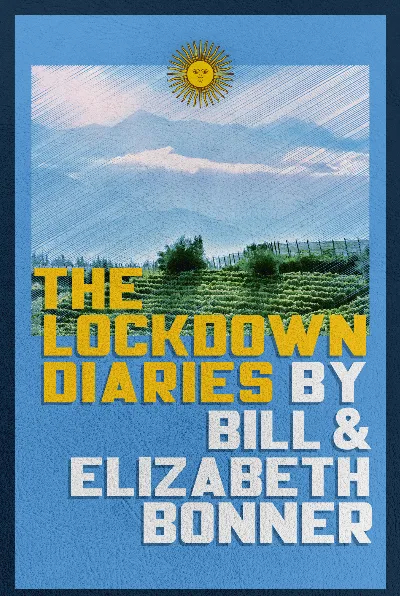
Late last year, we collected all of his essays from the lockdown period and published them in one complete volume. It’s called The Lockdown Diaries. Until today, that collection has only been available to paid subscribers of Bonner Private Research. As another Easter gift to you, we’re ‘unlocking’ the collection for you to review and enjoy at your leisure.
Click on this link, or on the ‘download’ button below, and you’ll be able to view and download an electronic copy of The Lockdown Diaries, which also includes essays written by Bill’s wife Elizabeth during the same time. Make a cup of coffee or pour a glass of Malbec and enjoy!
Please note, this collection of essays for paying subscribers can be found in the Research Reports section of our website. Although you’ll be able to download and read the ‘unlocked’ report, the rest of our Research Reports are reserved for subscribers, as are comments on all Research Reports, Weekly Updates, and Monthly Strategy Reports. You can become a paying subscriber at a special rate (good for the next 72 hours only) by going here.
May 25th, 2020
By Bill Bonner
Stuck here in Argentina, we have been learning as much as we can from a failed economy. But that’s not to say that everything has failed. What follows is a brief history of one of the most successful investments of all time. It was daring, bold, difficult, but ultimately very profitable, creating one of South America’s largest fortunes and nourishing the political career of the man who might have kept Argentina from going broke.
We’re talking about “Tabacal,” an enormous sugar cane operation in Northwest Argentina. We bring it up because it tells us something about the world as it was in the early 20th century… and the world as it is 100 years later.
The story begins in 1916. It was then that Robustiano Patrón Costas got off the train in Orán, Argentina, and became convinced that the area was suitable for a modern sugar mill. It seemed very unlikely at the time. The surrounding countryside was a wilderness, with very few people and none of the support infrastructure that a large plant would need: no towns, no skilled laborers, no roads, no electricity. Nevertheless, he got together a group of investors and began a breathtaking project that today seems almost impossible.
They had to clear thousands of acres, with much of the work done with shovels and pickaxes. An extensive irrigation system had to be built, with a river diverted into canals, gates, dikes, and hundreds of ditches. The land had to be plowed and planted. Pests and plant diseases had to be identified and defeated. A railroad, with 16 engines and 1,500 freight wagons, had to be built to transport the cane to the mill.
And that was just the beginning. In cutting season, 8,000 laborers were needed. Where would they live? What would they eat? And what about the thousands of permanent employees? Where would their children go to school? Where would they pray? And what if they were sick?
So Patrón Costas and his associates built a whole town, too. Houses – clean, neat, modern, laid out on tree-lined streets – churches, schools for 1,200 students, bakeries, sawmills, two barber shops, wood shops, metal shops, a theater, tennis courts, polo fields, and a hospital that provided not only nursing but X-rays and surgery, too.
A dairy provided milk. A farm provided fruit and vegetables. The bakery processed 12,000 pounds of flour each day. And the sugar mill itself was similarly immense, powered by its own electric plant. In 1945, it produced 51 million kilos of sugar and 4 million liters of alcohol. By the 1980s, it was the largest sugar mill in the world.
The investors and workers prospered together. The mill brought in thousands of local people with no skills and no money, many from the indigenous tribes of the area, and turned them into carpenters, cooks, machinists, bakers, drivers, and even chemical engineers. Patrón Costas gained such a reputation that he ran for president of Argentina in the 1940s.
Alas, the appeal of risk-taking, hard work, and real growth was already waning. People like capitalism on the way up; they prefer socialism on the way down. Patrón Costas lost to the socialist Juan Perón. The country has been sliding ever since. The remarkable thing is that, even with 100 years of technological advance, and an abundance of capital, it would be nearly impossible to build Tabacal today. It took 17 years of struggle for the project to
prove itself. Who would risk his money for such a long-term payout now?
Instead, the ambitious young man becomes a fund manager or develops a new app and plans to go to IPO within 36 months. Someone with an idea as big as Tabacal would be doomed to failure. The “indigenous people” would stop him. The “environmentalists” would stop him. The tax men, labor unions, banks and lobbyists, the politicians and bureaucrats, the whole “community,” all would stop him from putting a stake in the ground.
And if, by some miracle, he did overcome such powerful opponents, he would be regulated and controlled, his margins would evaporate in the heat of inflation, and his profits would be taxed away. He would realize that, in order to survive, he’d have to become a crony. He’d say he was combating climate change with “green” technology, that he was putting women and minorities on his board, that he was creating a safe place for his employees…
And then, instead of making money selling sugar at a competitive price in a free market, he’d ask the government for low-cost loans, tariff protection, and emergency subsidies.
Sic transit gloria capitalista.