

Friday, March 27th, 2026
Bill Bonner, from Baltimore, Maryland
‘Not Winston Churchill we’re dealing with...’
—Donald Trump, referring to UK prime minister Keir Starmer
History is a long tale of woe and witless wonders. The public record is full of them. From the Crusades to the Great Leap Forward to Epic Fury. Each one is absurd in its own way...but also much like the ones that came before it.
And now, what is the best reference for what we are seeing in the Middle East?
Certainly, the War Against Iraq is a precedent. Very similar. The attack was launched on trumped up charges. It vilified Iraq’s strongman as a monster. And it brought overwhelming force to bear on a relatively minor and unprepared opponent.
George W. Bush was able to announce a ‘mission accomplished.’ But what was the mission? Whatever it was, the War on Terror ended up costing the US as much as $5 trillion, leaving plenty of terrorists still on the ground and political power both in Iraq and Afghanistan now largely back in the hands of people who hate us.
But at least the invasion of Iraq respected the trappings of international law — even in breach — and was careful not to alienate the rest of the world.
The Trump Team and its Israeli sidekicks didn’t seem to care about allies. They invited them only after the war took a nasty turn. Every invitation was refused, leaving the two attackers on their own. This time, it’s the Iranians who have globalized the conflict by closing the Strait of Hormuz.
And while the Iraqis were clearly whupped, the Iranians are still defiant. For them, this is a struggle for survival. America’s leaders see it only as a diversion...a ‘war of choice’ that they can walk away from whenever POTUS ‘feels’ it’s time to go.
Trouble is, after having destroyed Iran’s conventional defenses, the empire now faces unconventional or a guerrilla war, where its advantages are less clear.
“It’s not Winston Churchill we’re dealing with,” said Trump, after Britain showed its reluctance to join the fight. And thank God.
WWI was one of the biggest disasters in world history. Nobody stood to gain much. Almost all parties were losers. And today, if you decided to visit the WWI graveyards of Europe...and spend a minute at each grave, 40 hours per week, 50 weeks per year...it would take you 83 years to view them all.
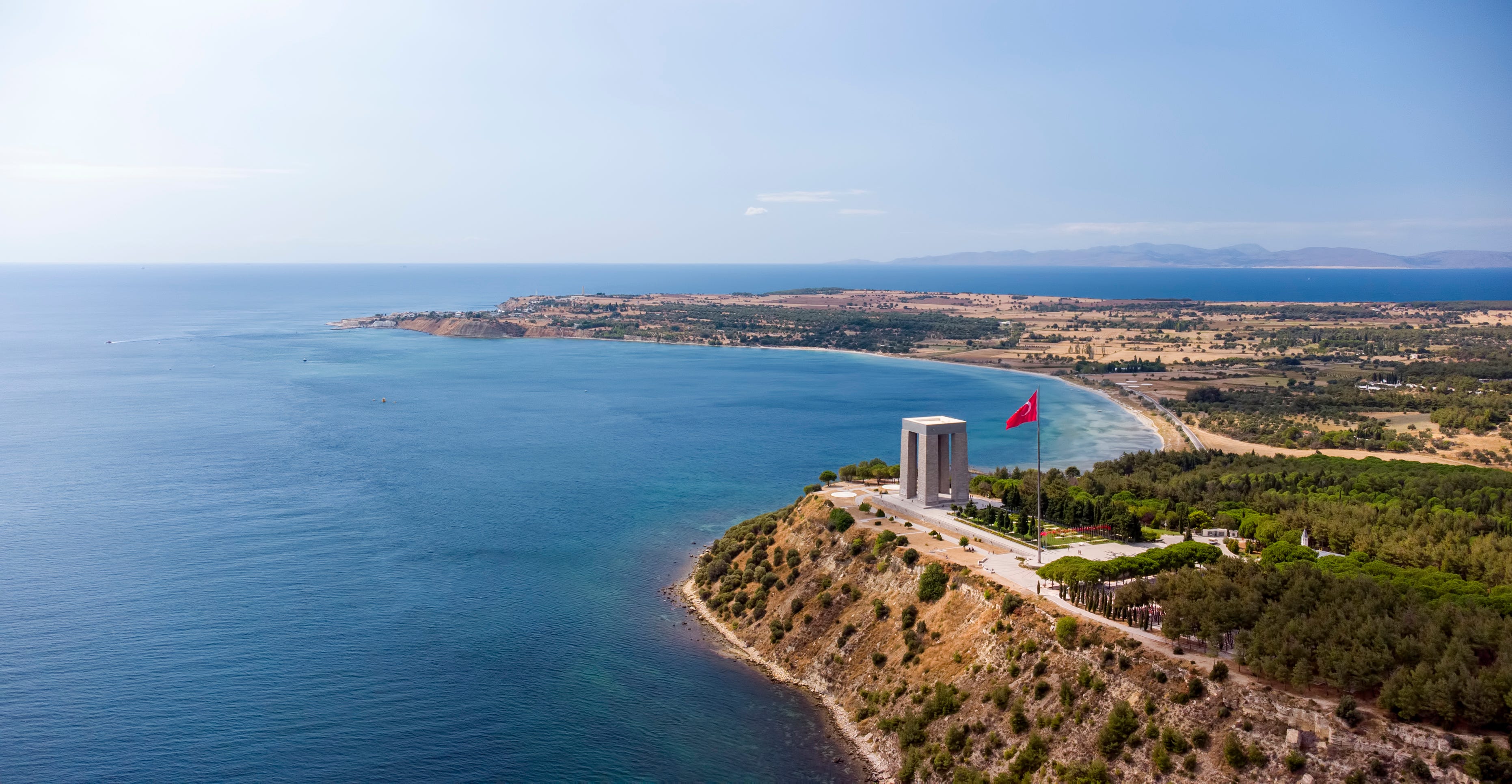
The war was already six months old when the soldiers — mostly ‘colonials’ from Australia, New Zealand, Ireland and India — landed on the Gallipoli peninsula. At that stage, the shrewd thing for Britain to do would have been to withdraw. It had everything to lose and nothing to gain. And had it pulled out then, it might have saved the empire and the pound sterling.
But that’s not the way History works. Once in the war, Britain felt it had to win. Its soldiers are described today as ‘lions led by donkeys.’ The lions died, and the donkeys brayed for victory.
Churchill, foremost among the hinds, was First Lord of the Admiralty. He was adamant that the key to victory lay in control of the Dardanelles. The problem was similar to that which now faces Trump. Britain had gotten itself into a war in which it had no real business. And when Germany’s ally — the Ottoman Empire — closed the vital strait from the Black Sea to the Mediterranean, Churchill thought it would be a cakewalk to re-open it. The problem was not the shipments of oil, but the transit of food, that concerned him. Britain imported much of its wheat, meat and sugar. Consumer prices were rising.
But it was not just the importers who suffered; the Russian Tsar — allied to Britain and France — relied on export revenues from selling food and raw materials, much of it shipped through the Dardanelles.
The campaign was an abject failure. The Ottoman Turks held the high ground. And they could not be dislodged. They may have been poor marksmen and poorly trained soldiers, but they were able to inflict about 250,000 casualties on British and French forces.
Russian finances were severely weakened, contributing to the eventual overthrow of the Tsarist regime. As for Britain, the losses were similarly profound. The Turks had been viewed as a backward people who posed no real threat to European powers. It turned out, they weren’t so primitive after all. It was obvious that the British Empire was in decline. And the Gallipoli campaign helped bring down all three empires — Tsarist Russia, the Ottoman Turks, and the UK.
It had been sold to Parliament, by Churchill, as a clean, surgical mostly-naval operation that would be over quickly with few casualties and minor costs.
It didn’t work out that way. It rarely does.
Stay tuned.
Regards,
Bill Bonner
Not sure comparing the follies of WWI is at all analogous to today's Iranian nuclear threat.
Blocking a waterway vs threatening to "nuke" major cities are two entirely different problems.
Those that do not agree Iran should be curbed...
Should inform the rest of us how to proceed when Iran does obtain "the bomb".
It's always fascinating to look at other countries and marvel at how their populations were led, largely without objection. into disastrous wars. The feeling changes more to sickening, at least for me, as we repeat their mistakes.