


Sunday, December 14th, 2025
Laramie, Wyoming
By Dan Denning
After a circuitous 14-hour journey—beset by a 72-hour flu—we resume our post here on the High Plains of Laramie. I wish the high ground gave us some advantage in seeing what’s ahead in 2025. But for today, I’ll enjoy the balmy weather as we look forward to the week ahead.
Mind you, last week was…what the management geeks call…productive. Bill and Tom and I had an important conversation about our course for 2026. You probably share our main concern—the damage inflation does to our cash position. More on that as the year closes.
In the meantime, look forward to a new Private Briefing and Research Report as 2025 comes to a close. I also ran into some old friends in Baltimore who agreed to be guests early in 2025 (you might be surprised who they are). But for now, it’s back to bed.
Until tomorrow,
Dan
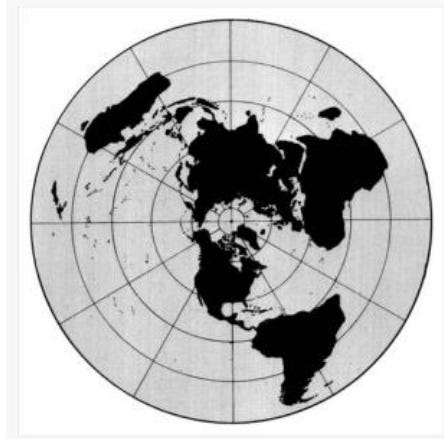
P.S. If you’re game for some in-depth reading on geopolitics on a Sunday afternoon, try this essay from Peter Turchin. Turchin’s theory of ‘cliodnyamics’ is based on the idea of applying mathematical models and statistical analysis to the rise and fall of great powers (geography plays a big role). Clio, by the way, is the muse of history in Greek mythology.


From the below noted podcast
Anarcho-tyranny describes a political condition in which the state abandons its duty to restrain real threats to public order while smothering the daily lives of law-abiding citizens under layers of surveillance, regulation, and punishment. What results is a strange inversion: violent criminals and rioters walk free, while ordinary citizens are fined, censored, or even arrested for words typed into a phone. What should be the bedrock of justice (the equal application of law) becomes a weapon of selective enforcement, used to intimidate the compliant while ignoring the truly dangerous.
The term was coined by the late Samuel T. Francis, whose posthumously published Leviathan and Its Enemies offers a searing analysis of twentieth-century America. Francis argued that the rise of the “Managerial State” marked a profound transformation of Western political order. Old forms of authority such as family, church, and local enterprise gave way to sprawling bureaucracies and corporate behemoths, organizations devoted less to the common good than to efficiency, control, and the management of populations. These entities, Francis observed, are largely insulated from accountability, and they exist first and foremost to perpetuate themselves.
Within this system, anarcho-tyranny becomes not a bug but a feature. By allowing chaos to simmer (unpunished crime, lawless streets, constant insecurity) the regime manufactures the pretext for further control. Meanwhile, the full weight of state authority falls on those who obey the rules, precisely because they are easiest to police. It is safer for the state to punish an office worker for an ill-judged social media post than to confront gangs who rule neighborhoods with impunity. It is easier to squeeze the citizen who files his taxes than to discipline the oligarch who launders billions. Disorder distracts, and tyranny pacifies. Together they reinforce the grip of the managerial class.
The dynamic Francis described echoes the darker warnings of George Orwell. In 1984, when Winston Smith asks O’Brien about the future, the reply is blunt: it will be a boot stamping on a human face, forever. Orwell’s image is more than a metaphor for violence. It captures the deliberate humiliation and permanent subjugation that defines totalitarian rule. The boot is the power of the state; the face is the human person, stripped of dignity and crushed into silence.
Anarcho-tyranny embodies this same logic. The tolerated disorder creates the fear; the suffocating regulation delivers the humiliation. Citizens are trapped between insecurity and repression, robbed of the protections that government owes them while being constantly reminded of the penalties that government can inflict. The people sense the betrayal: the state that once promised justice now offers only a choice between chaos and control.
It is little wonder that frustration in the West grows sharper by the day. Ordinary men and women watch as violent offenders are released in the name of reform, while petty infractions are punished with zeal. A mother who questions ideological lessons in her child’s school finds herself investigated. A man who makes a joke online is dragged before a court, while mobs who burn, loot, and terrorize face no consequence. A violent criminal is released immediately, while a citizen who defends his family from a home invader is arrested for “endangering the life” of the intruder. The very inversion Francis described has become daily reality: anarchy for the lawless, tyranny for the lawful.
This is not incompetence. It is not accidental. It is not random. It is strategy. Anarcho-tyranny is a method of rule, designed to sap resistance, normalize fear, and preserve the dominance of an elite that thrives on disorder it refuses to stop and on obedience it never ceases to demand. Orwell’s boot and Francis’s managerial state are not just abstract theoretic concepts. They are the shape of our present.
Sorry you caught the flu. Were you vaccinated?