


Wednesday, July 22nd, 2026
Bill Bonner, from Poitou, France
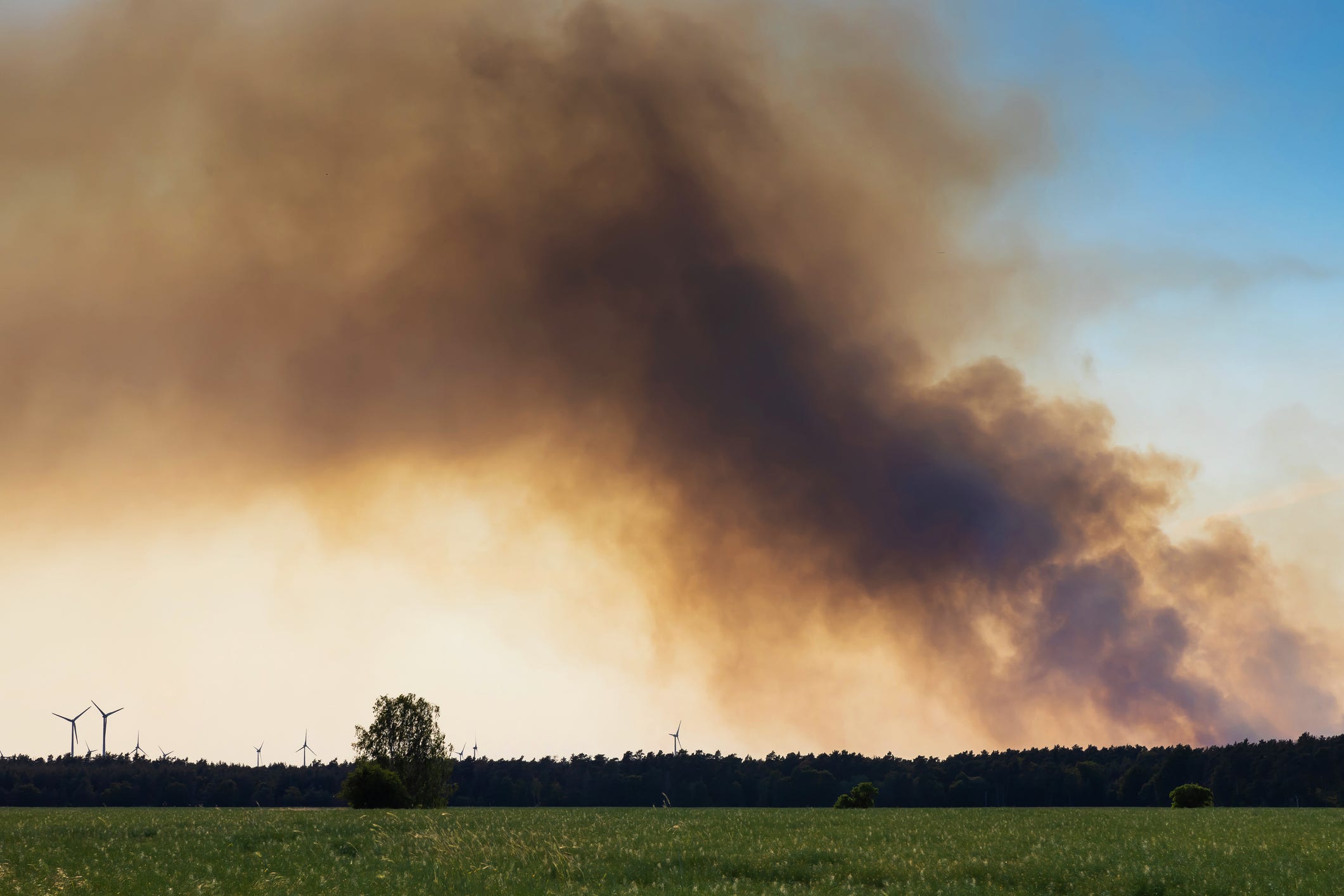
It looked like a scene from Hell. Charred skeletons of trees. Blackened grass. Burnt-out fields. And thick smoke.
On the left were the gendarmes blocking a turn. Straight ahead was heavy smoke. Daily Times:
Nearly 40,000 hectares of forests and vegetation have burned across France since the start of 2026, Interior Minister Laurent Nunez said. The damage has already exceeded last year’s total…Nunez said the burned area has also surpassed the level recorded by this stage in 2022. He described 2022 as an exceptional wildfire season. Hundreds of firefighters remain deployed to contain active blazes.
We’ve been in these parts for three decades. We’ve never seen anything like it. But stuff happens, doesn’t it? Isn’t that as good an analysis as we are likely to get?
We were on our way back from a wedding in Normandy. The two principal actors – bride and groom – pledged not to disappoint each other. That pledge, too, sometimes proves hollow. But we count on each other to do the right thing…and hope for the best.
Just as we got close to home, a huge pillar of smoke rose up. It might have been TV coverage of the latest bombing of Iran. But it was our own farm. And it appeared to be on fire.
“Everything is super dry,” our handyman later explained. “All it takes is a spark and you’ll have a major fire on your hands. So, you’re not allowed to do anything that might set one off. No backyard barbecues. No fires in the fireplace. You can’t even mow the lawn.”
Everything was so parched, it didn’t look like mowing would be necessary for a long time. But…
“Why can’t we mow,” we asked.
“Because the blade might strike a stone, give off a spark, and cause a fire.”
It seemed unlikely, but Damien insisted that even unlikely things happen from time to time. And one of them was happening right now.
“No, it’s not on our property yet,” Damien clarified. “The wind shifted. The fire goes across the dry grass and then gets into the woods. But about ten of the local farmers came out on their big tractors. They plowed a firebreak that should stop it from getting to us.”
A minute later, the ten tractors thundered by the house…unpaid, unthanked…on their way to the next emergency.
Two water bombers flew over the fire and dropped their loads. Smoke continued to billow up…but then, a few minutes later, it grew less threatening. By evening, only a wisp was seen, curling up to the heavens as if from a supernaturally big cigarette.
“The fire’s been burning for a few days,” Damien reported. “But I think it is now under control. It’s still burning, but under surveillance.”
Stuff happens. We move on to other stuff. Most of the headlines focus on the war. Fox:
Trump weighs full-scale return to war after Iran launches new missile attacks
Chief foreign correspondent Trey Yingst reports on new Iranian missile attacks across Bahrain and drone launches over Jordan following a tenth night of U.S. strikes. Former National Security Council Director Rich Goldberg analyzes operations in the Strait of Hormuz after Central Command escorted 900 commercial vessels carrying 450 million barrels of crude oil.
We count on our president to do the right thing. But has the spark already been struck? Will the war be out of control…how much will it destroy before the tractors arrive?
The price of oil – to the moon? Lines at gas stations a la 1973? Nothing at all? Hard to know, but probably not good.
And how about the stock market? Stuff could happen there too. Our grandfather used to tell us a story that passed around Baltimore during the Crash of ‘29. A desperate man jumped out of a 10th story window. (You could still open windows back then.) As he was falling past the 3rd floor he was heard to say: ‘Well, I’m alright so far.’ That sweet lullaby came to a sudden end two floors down.
By almost any metric you use, stocks are near the highest levels ever – once again on the 10th floor or higher. They could go up, of course. And maybe AI could power a whole new economic boom.
But another fory years of rising stock prices? Much more likely, but by no means guaranteed, is a sell-off. Back in the 1870s railroads were the AI of the day. They were expected to make investors richer than ever. But in the Panic of 1873, railroads failed, banks failed, lumber companies failed…all the components of the boom hit the sidewalk. And the resulting depression lasted for the next six years.
And then, twenty years later, another railroad bubble burst. Railroads were considered such good investments that the public poured money — usually by buying bonds — into new railroad construction. Track mileage, the rough equivalent of AI data centers today, doubled in the 1880s. Actual freight traffic, and revenues, could not keep up. The bungee-like tether – connecting investors’ fantasies to real world output -- stretched.
What could the railroads do?
They didn’t have enough income to pay past debts. So, they began that immortal ‘dance of the doomed.’ They issued new debt to pay the old debt. It wasn’t long before investors refused to lend more money and the whole bubble went flat. Five hundred banks went broke. Unemployment in Michigan reached 43% and 15,000 businesses failed, including the Union Pacific, Northern Pacific and Santa Fe railroads. The resulting depression lingered until 1897.
Stuff happens.
Regards,
Bill Bonner
Research Note, by Dan Denning
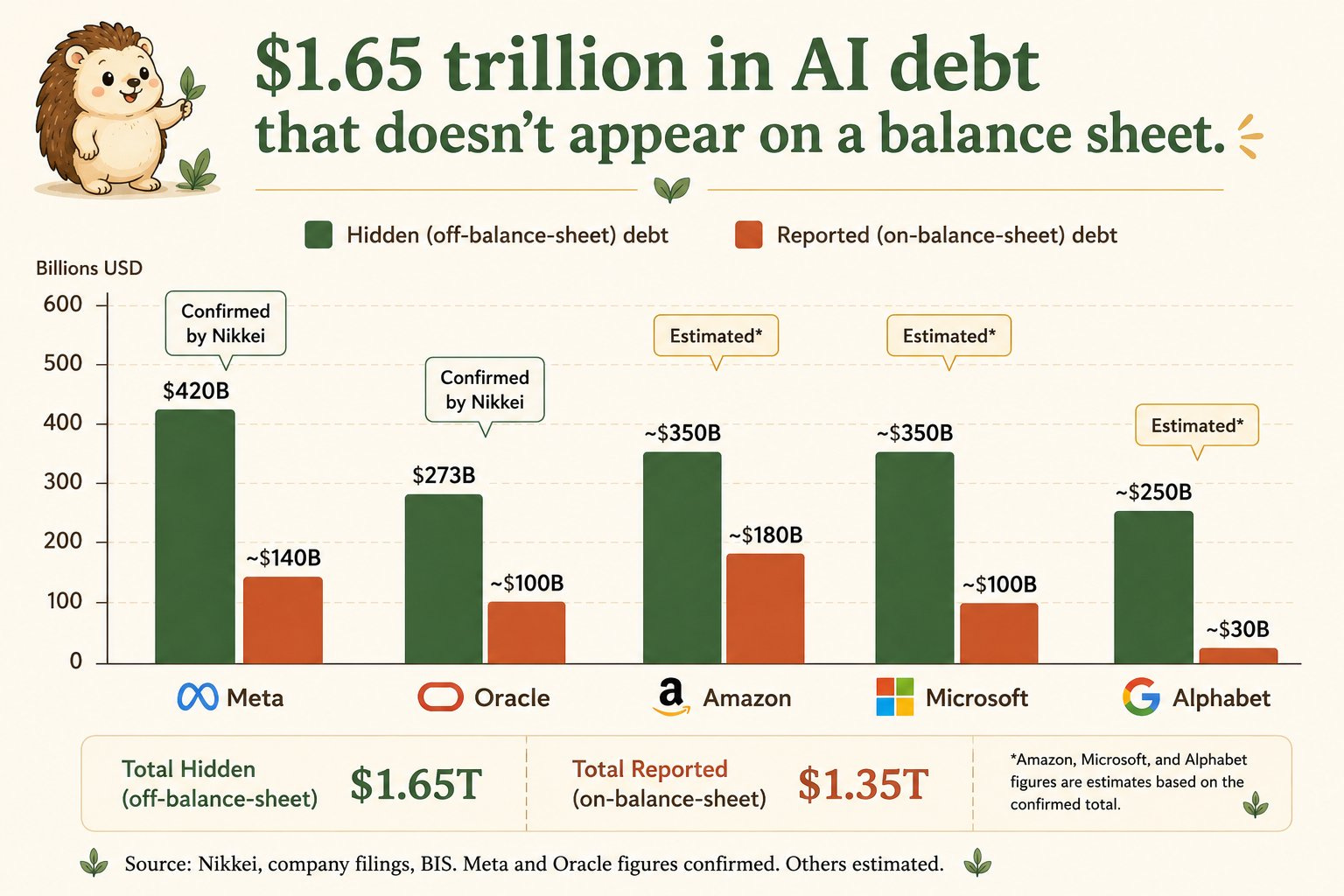
Everyone knew about the $1.35 trillion in ‘hyperscaler’ debt. That’s free cash flow the big tech companies have been pouring into servers and GPUs in order not to fall behind in the AI race (this transfer of free cash flow has driven up the chip stocks in the Philadelphia Semiconductor Index 73% year-to-date and 117% in the last twelve months).
But the $1.65 trillion in hidden debt was ‘known unknown.’ Now that it’s known, what difference will it make? A quick review of the last capex/debt booms might help quantify the risk to investors.
In the last boom/bust in tech and American housing, off-balance sheet debt was ‘hidden’ in SPVs, special purpose vehicles or layered together in complex debt securities that traded like bonds and were rated highly by the ratings agencies. This gave them appearance of safety, while disguising the risk in the underlying assets/collateral.
The whole process understated how much risk individual companies (like Enron) were actually taking…and how much debt and leverage were actually in the financial system which other parties were exposed to but unaware of. When the market found out, the resulting loss of confidence triggered a massive correction.
Is it different this time?
Well, the ‘hyperscalers’ have the cash. And the assets are real (GPUs and servers). But will the investment in AI capex pay off? At some point, the ‘hidden’ debt will have to come back on the balance sheet (where it will begin depreciating and taking a bite out of free cash flows).
But more to the point, the investment will have to pay off. AI will have to ‘be a thing’ and find a ‘use case’ to justify the trillions spent on the infrastructure . And that is the real question: Have the ‘hyperscalers’ over-invested in capacity today the same way the railroads overinvested in the 19th century (and the same way all investment manias over-invest in the tech of the day)?
If they have, is there the same level of ‘systemic risk’ today? Nvidia (the big recipient of all those free cash flows and capex) trades at 19 times sales. Google: 9.99, MSFT 9.53, and Amazon at 3.59. If the debt doesn’t pay off these widely owned and market-leading stocks will be further re-rated…to reflect lower cash flows and ROIs in the decade ahead. As the chart below shows, the S&P 500 itself trades at a record relative to sales.
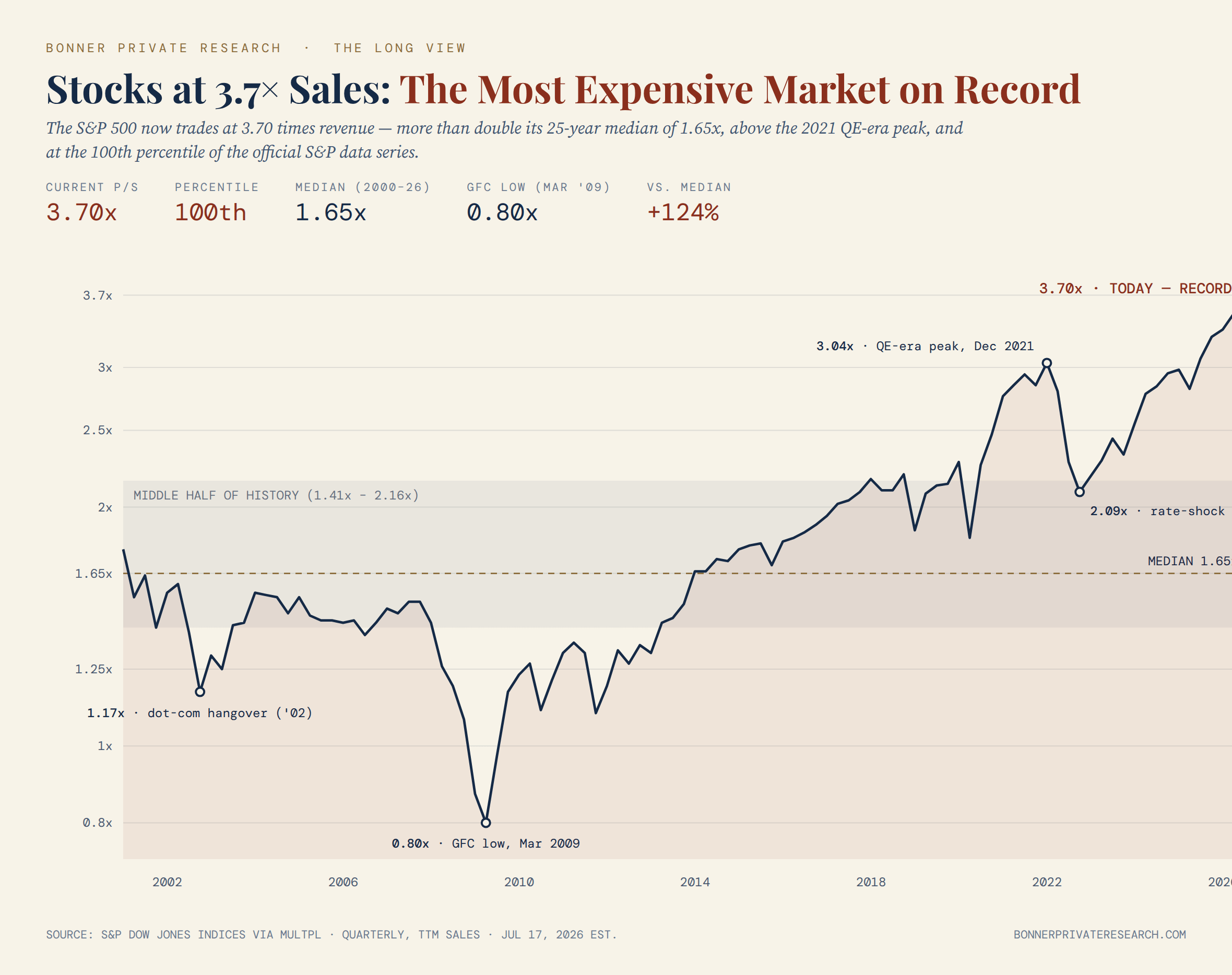
Investors today are paying $3.70 for every dollar of sales the S&P 500 companies bring in, a rounding error from the all-time record of $3.73 and more than double the 25-year median of 1.65x. It's also 22% above the December 2021 QE-era peak — the level that preceded a 25% drawdown — only now without zero rates as the excuse.
What is required to make a small fortune on Wall St?
A large one...
Just a quick note that depreciation takes its bites out of earnings not cash flow. Probably just a missed proofread anyway.