

Tuesday, May 12th, 2026
Bill Bonner, from Buenos Aires, Argentina
A dear reader, planning to move here from Australia, wrote to ask if we thought this would be a good time to buy property in Argentina.
Context: Argentina is the most fascinating experiment in government and finance since the Bolsheviks took over Russia in 1917. Back then, the collectivists were determined to prove that they could do a better job of running a country than free people could do on their own. They failed.
In Argentina a similar, but less dramatic. experiment began in the 1950s, led by the Big Man, Juan Peron, and continued for the next 70 years. They wrecked the economy, too. Now, Javier Milei wants to show that the free market can fix it.
The first two things we noticed when we got to the airport in Buenos Aires was a major remodeling on the international terminal...and a cup of coffee cost 6,600 pesos.
Some quick math tells us that the dollar cost of the coffee was a little less than $5. That is about what you pay in most places.
We are staying in the old, elegant ‘Recoleta’ neighborhood...in the old, elegant Alvear Hotel. We had heard that things were getting pricey. But you wouldn’t know it from the local real estate listings. At a glance, you could buy a decent two-bedroom apartment for around $250,000. Not much more than it was a few years ago, the last time we looked. That seems cheap to us...too cheap to be the top of the market. But there are few fixed-rate, long-term mortgages in Argentina. The lack of credit keeps prices low.
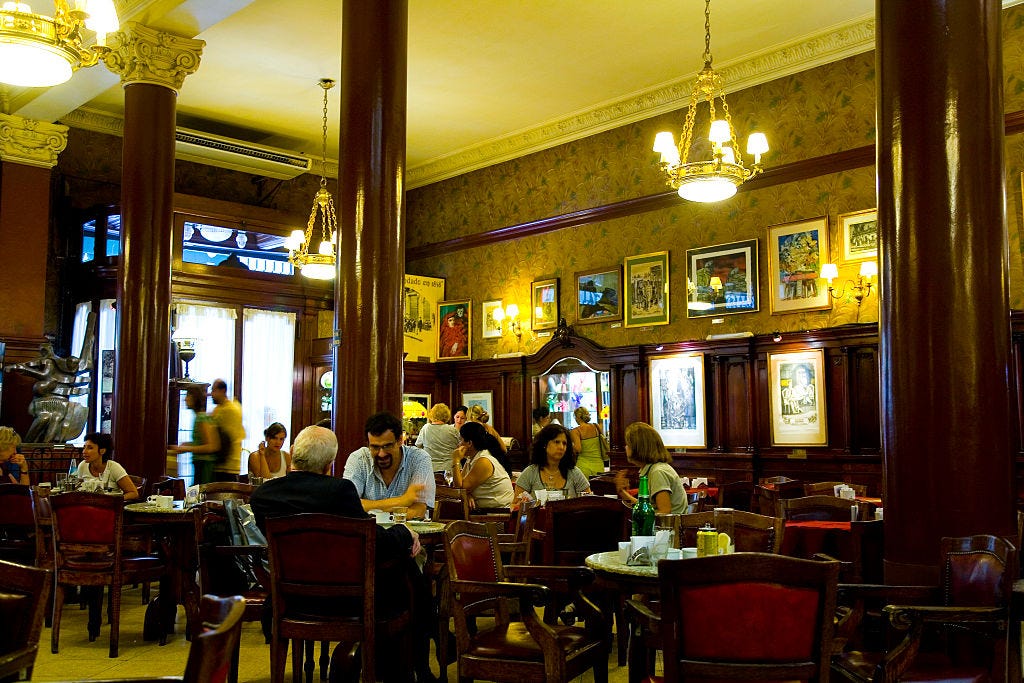
But the quality of life, at least here in this upscale neighborhood, is high. Yesterday, we went for lunch at La Rambla on Posadas. It’s a classic corner café where we’ve gone for many years. The waiters are professionals...dressed properly with black jackets and white shirts. The food — mostly pieces of beef in various ‘sandwiches’ — is excellent. And the décor — warm woodwork throughout, with wrap-around glass in front — was inviting and restful. As for the loud music that ruins most US restaurants, there was none. We sat and sipped our coffee, happily thinking that if there were a major nuclear war, we here in the Southern Hemisphere, would be among the last to die.
Ah yes, Buenos Aires, mi querido!
Small things. But a life is passed in small increments. Minutes...hours...days...full of sights, sounds, tastes, touches and words. Let the economists worry about GDP growth; we just want a quiet place to have a cup of coffee.
Beyond these initial impressions, we turn to two old friends who follow events in Argentina more closely than we do. Joel Bowman, for example, is on the case and on the numbers:
Country Risk: down from 2,700 to 510
Poverty: down from 57% to 28%
Annual Inflation: down from 211% to 30%
Debt: down $30 billion USD
Public Spending: down 30%
Public Employment: down 65k positions
Budget Surplus since 2024
Reserves: up $28 billion USD
Those numbers describe a major turnaround. But Doug Casey has a word of caution. He lists some ‘unforced errors’ committed by the Milei government:
‘When he was elected, one of his central propositions was abolishing the Central Bank. That hasn’t happened so far. In fact, he’s no longer talking about eliminating the evil institution.’
‘Argentina should have defaulted on its debt, which was run up by past criminal regimes. Though much of that money was stolen, it’s now a liability of future generations of young Argentines. But instead of defaulting on what they have, he’s gone back to the IMF to borrow more.’
‘Milei said that he wants to join NATO, a truly stupid and pointless desire. He supports the criminal Zelensky regime in the Ukraine. He wants to take sides in the conflict between the Israelis and the Palestinians.’
‘And...Argentina, a bankrupt country, bought 24 used F-16s from Denmark for about $300 million, which makes no sense.’
The errors are costly. But probably not fatal. A bigger threat probably comes from politics. Cutting off government giveaways helps an economy in the long run, but it causes pain to voters in the short run. They may lose patience. We consulted our own expert source:
“Milei is doing the right things,” said the cab driver. “You know, we had thousands of people we called ‘gnocchis.’ They were on the government payroll but they never came into work. Milei is getting rid of them. But it takes time. Probably two generations. You need to get rid of a whole mindset, where people think they can live off the government….But I think this is the time to buy here in Argentina. It is a country on the way up.”
Hmmm...two generations is a long time to wait.
We’ll be here in Buenos Aires for few days. Then, we’ll head up to Paraguay.
Stay tuned for a report.
Bill Bonner
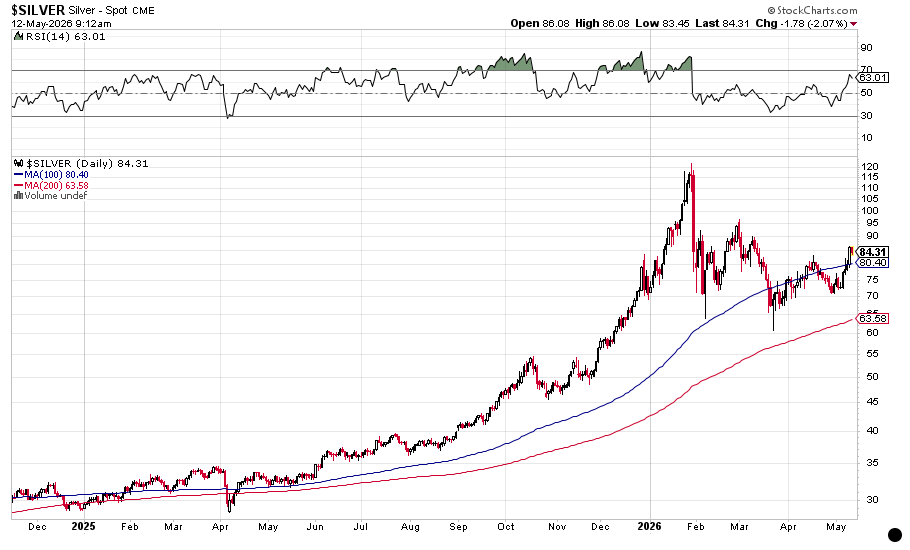
Bill, for sure the cafe is a beautiful place to enjoy a cup or two of coffee. I read Joel Bowman daily so I am aware of the good things Milei has done to date but I am afraid he has a big hill to climb to bring the country back to the glory days of the past. When I look at America I wonder if it will ever be possible to bring the financial structure back to a reasonable level.....I fear not! I will bet the majority of your readers are over 50 and they too wonder if sanity will ever return to our financial structure. Never sell your gold!
Jim Marshall
...Bill appreciates a quiet restaurant experience, with respectful properly attired waiters.
Such a scenario can only be had in a country where most all share the same values and appreciate the same culture.
When you have establishments residing within a diversity of culture, you will get that diverse service experience too...