


Thursday, February 5th, 2026
Bill Bonner, from Amsterdam, Holland
We’re on our way rejoicing...recalling a superb couple of weeks in Nicaragua.
With the memory of it fresh in our mind, we will tell you more about life at Rancho Santana, before we forget.
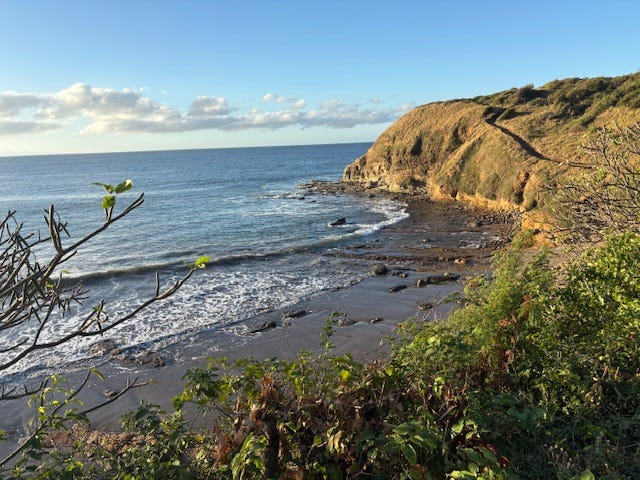
The ranch sits on the ‘Nicaraguan Riviera,’ on the Pacific Coast as it approaches nearby Costa Rica. It is endowed by nature in several important ways. Unlike the East Coast, it is marked by coves, cliffs, long stretches of white sand, mountains, rivers, and bluffs.
You can often tell what lies under the sea by the shape of the land above the waterline. If it is flat, the water is likely to be shallow. If it rises steeply from the beach on the other hand, so is the water likely to deepen quickly.
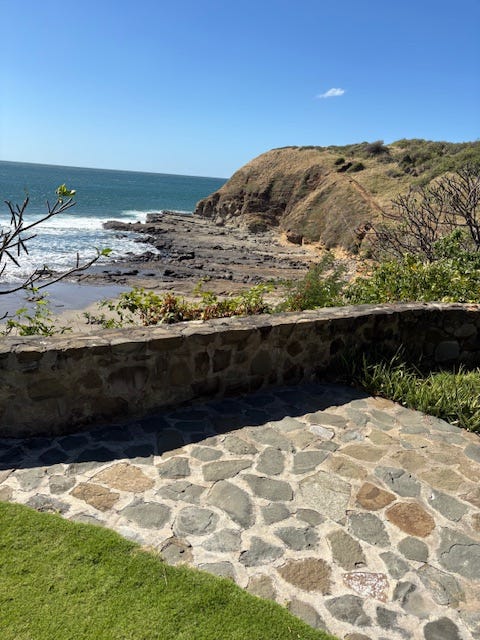
The different terrain on this part of the coast makes for very different beaches. The one in front of our house, for example, is wide and shallow. It is a good beach for children; even far from the dry sand, the water is not very deep. And there is a spit of sand sticking out in the middle of it which surfers seem to like, called Panga Drops.
Around the hill to our right, on the other hand, is a beach where the sandy bottom disappears into the deep blue sea very quickly. There, the waves crash not so much on the beach, but against it, pummeling unaware swimmers onto the sand.
Another advantage of the area is that the water is warm, almost perfect for swimming. We are in the ‘dry tropics,’ just a few degrees south of the Tropic of Cancer. Both flora and fauna seem to like it — including many species of both that we’ve never seen before. Monkeys swing from the trees and coyotes and wildcats roam the ground. Bougainvillea, along with other flowering trees and bushes, add color.
Humans like it too, especially since the invention of air-conditioning. The days are warm — usually in the ‘80s — but the ocean breezes — which can become quite stiff — cool things off. We leave windows and doors open in the morning, evening, and night. In the heat of the day, we close up and turn the AC on.
Our typical day begins with the morning light coming through the doors of the second-floor veranda. We hear the sound of the waves and the wind...and then see the first rays of sun coming over the hill on the far side of the beach.
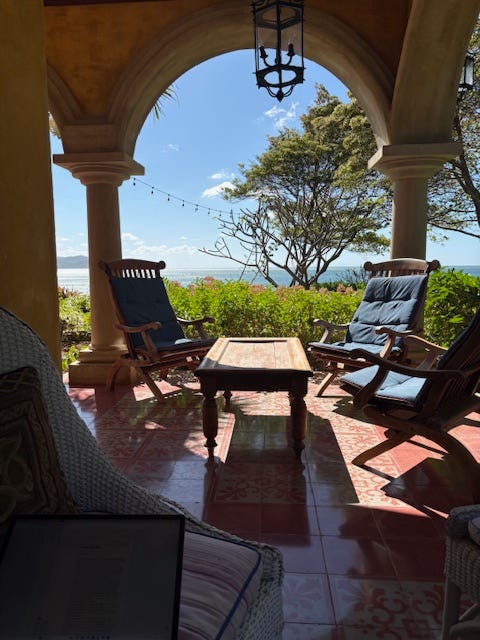
After three weeks of walking barefoot on the beach we must have the smoothest feet in Christendom. It takes about an hour to complete our daily walk, to the opposite end of the beach and back. We say hello to fellow walkers, surfers, and vacationers...without breaking our military pace. Back at home, we eat a very hearty breakfast prepared by the housekeeper. Eggs, ‘gallo pinto’ (beans and rice), and fruit, before removing to the veranda for coffee.
And then, we set to work with our usual correspondence — including our letters to you.
For lunch, we have a small salad or left-overs from the previous evening’s meal. By noon, it is usually time to close the doors and turn on the AC, so we eat in the dining room.
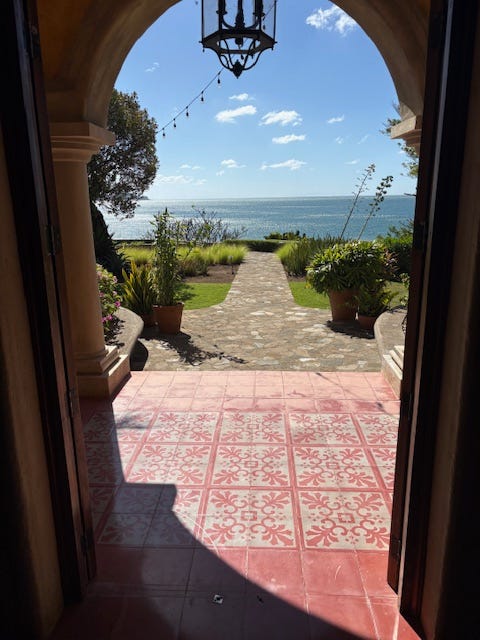
Our house is unusual for the beach. It is built in the traditional, Spanish colonial style of nearby Granada. It doesn’t look at all like a ‘beach house.’ Instead, it appears to be antique and formal. With its 17th century moldings and religious art on the walls, it makes us feel as though we should put on a tie and sit up straight.
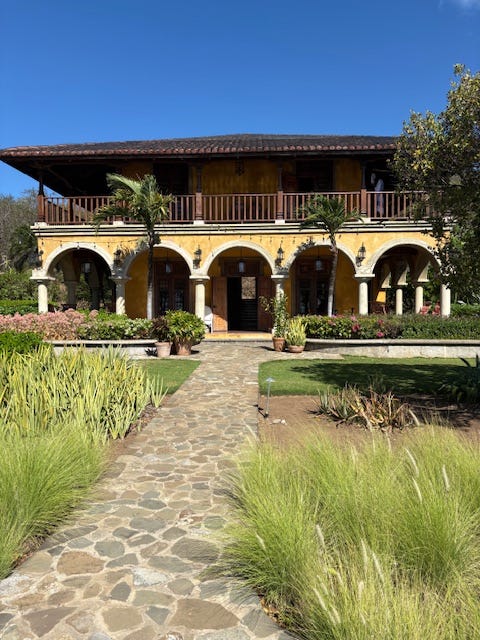
The old-timers knew how to work with the local climate. Before AC they used thick walls and heavy shutters to protect them from the noonday sun. Then, in the evening they moved outside, onto verandas and patios for drinks and dinner.
Sometimes we eat dinner at home, but often we drive out to the ‘clubhouse’ or to one of the many restaurants popping up on the coast. These are usually beachy, Jimmy Buffett places...often with sand under foot and ‘palapas’ (palm thatch) overhead. They serve cold drinks and warm food, specializing in lobster, tuna, and mahi mahi freshly hauled in from the nearby sea.
The fishermen stay near the coast. They are like the Apostle Andrew, pulling in his nets at Galilee; their methods have scarcely changed in hundreds of years. And some race along the shore, swirling their hooks over their heads...dashing to wherever they see the pelicans feeding. Tell them what you would like for dinner and they will bring it to you, still shaking on the line.
In the last few years, there has been a lot of development on the coast — despite the fact that the US government has discouraged American travelers from coming here. The Nicaraguan government is not especially welcoming to the hospitality industry either. Or, to any other industry, for that matter. It believes that the local feds should control everything. And right now it is on the alert for enemies. There are police checkpoints on the major roads, looking for contraband or contrabandits.
Getting here is not easy; airline service is limited. But the locals are hopeful. They think the Ortega family is running scared. Rumor has it that Daniel Ortega, veteran of the Sandinista revolution and now the Big Man in Managua, got a call from Marco Rubio. According to the whispers, Ortega was told to resign...or he’d end up sharing a bathroom with Maduro.
Whether any of that is true or not, we don’t know. But the visitors keep coming — many of them from Europe. The days are bright and beautiful. The nights are soft and sweet. The people are friendly. And the prices are still (relatively) low.
It was a pleasant interlude.
Regards,
Bill Bonner

There's a fairy tale-like aspect to all of this. Yes, it's highly informative and highly entertaining, and much appreciated, described as only Bill Bonner can describe. Still, there is something vaguely strange and surreal about it. All I can say is that life at this level is so different, so-called normies such as I, even at this stage of life and development, could have trouble relating to it. Perhaps this is part of the benign disconnect some of us experience at this point with the whole Bonner Private Research arrangement. Then again, it could just be, and likely is, I. Best always. PM
Bill, I'm trying hard not to be jealous.